Ancient DNA Unravels Pre - historic Family Trees and Social Structures


Sci-Tech News
Ancient DNA Unravels Pre - historic Family Trees and Social Structures

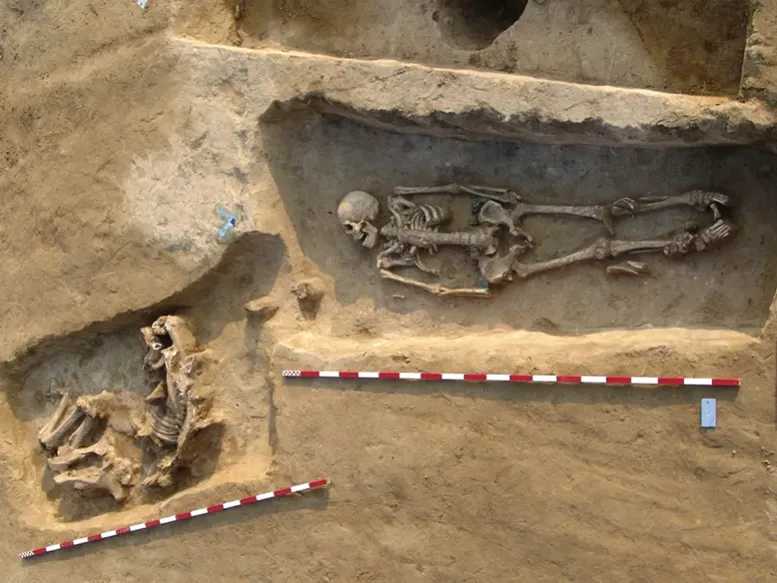
Scientists have successfully reconstructed the kinship networks of multiple ancient settlements through the genetic analysis of a large number of ancient human DNAs, with the longest network extending up to eight generations. This research has revealed social - structural features such as matrilineal or patrilineal inheritance and the layout of kinship cemeteries. Some individuals have even been traced to relatives thousands of miles away.


These achievements highlight that genetics is becoming an important tool for uncovering ancient social organizations and population migrations. By analyzing the genetic relationships among ancient human remains, researchers can gain in --depth insights into the family relationships and social structures of pre - historic times, which was difficult to achieve through traditional archaeological methods alone. For example, a recent study on the Fu Family Site in Shandong, China, confirmed the existence of a village organization composed of two matrilineal clans in the Dawenkou Culture 4,750 years ago1. Through the analysis of mitochondrial DNA and Y - chromosome haplotypes, it was found that the matrilineal inheritance was highly homogeneous, while the patrilineal inheritance was highly heterogeneous. This provides key evidence for the theory that the primitive matrilineal society was an important stage on the eve of civilization.


The research result has been selected as one of the top ten scientific breakthroughs of 2024 by Science, indicating its important position in the field of archaeological research. It not only opens up a new path for the study of pre - historic social structures but also provides a new perspective for understanding the origin and development of human civilization.

Latest Stories
Travel News2 minute readIntroduction The Nord-Pas de Calais Mining Basin in northern France, once the beating heart of Europe's Industrial Revolution, now captivates the world with its unique story of industrial heritage revival. Spanning 120,000 hectares, this former coal mining hub was inscribed on the UNESCO World Heritage List in 2012 for its 109 preserved industrial sites and ecological restoration marvels.
Entertainment News1 minute readKatrina Kaif, a British-born actress who has made her mark in the industry, is celebrated for a beauty that defies easy description—one that leaves onlookers captivated.
Social News1 minute readThe longest country name ever recorded was that of a now-defunct state: the "Great Socialist People's Libyan Arab Jamahiriya." This lengthy title, used from 1977 to 2011, reflected the political ideology and structure under Muammar Gaddafi’s rule.
Social News1 minute readTajikistan, a 140,000-square-kilometer nation in Central Asia, grapples with stark poverty and systemic corruption. A surreal 2016 scandal saw billions in state funds vanish after being allocated to construction projects—exposing the grim reality of one of Asia’s poorest countries, with a GDP per capita of just $1,271.
Social News1 minute readPakistan, a South Asian nation with vast lands and nearly 240 million people, faces severe economic hardships, leaving millions of families in dire straits. The World Bank reports nearly a quarter of its population lives below the poverty line, with many households earning less than $100 monthly. Its GDP per capita stands at $1,461, while rising living costs make daily expenses unmanageable.
Car Information1 minute readOne of automotive history’s most iconic nameplates, the classic Mini, serves as the perfect canvas for retro modification projects. A recent collaboration between Callum (led by design legend Ian Callum) and Wood & Pickett brings together modern design sensibilities and upgraded chassis engineering, breathing new life into the British icon.
Travel News2 minute readNestled in the heart of the French countryside, the Château de Chantilly stands as a testament to centuries of artistic brilliance and aristocratic grandeur. This architectural marvel, often hailed as a "castle museum," seamlessly blends Renaissance opulence with a world-class collection of art and historical treasures, making it a must-visit destination for culture enthusiasts and history buffs alike.