Hapalogenys nitens: The Striped Beard Croaker of Coastal Seas


Marine Biology
Hapalogenys nitens: The Striped Beard Croaker of Coastal Seas

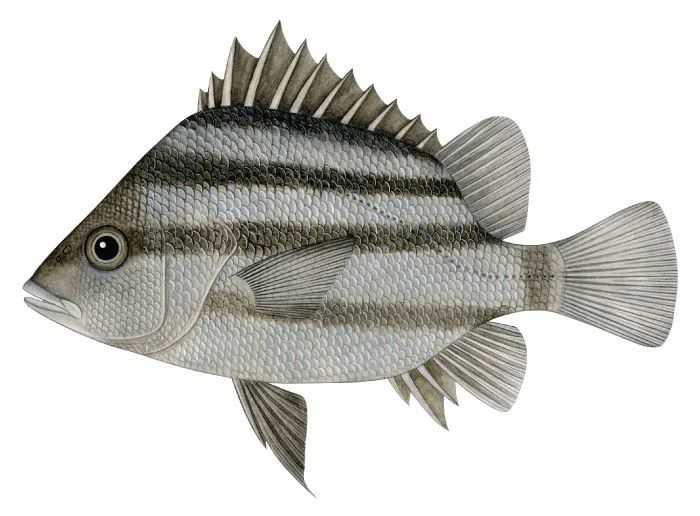
Hapalogenys nitens, commonly known as the striped beard croaker, is a distinctive marine fish belonging to the Haemulidae family. Native to the temperate and subtropical waters of the northwestern Pacific Ocean, this species is celebrated for its unique appearance and ecological significance. Characterized by its robust, laterally compressed body and striking longitudinal stripes, it stands out as a notable inhabitant of coastal ecosystems.


The striped beard croaker typically grows up to 30 centimeters in length, with a deep, oval-shaped body that tapers towards the tail. Its most defining feature is the series of dark, vertical to slightly oblique stripes running along its silvery-gray to brownish back, which contrast sharply against the lighter ventral side. The name "beard croaker" stems from the small, bristle-like barbels around its mouth, aiding in detecting prey on the seabed. Large, round eyes and a terminal mouth equipped with sharp teeth enable it to efficiently hunt for crustaceans, mollusks, and small fish. Juveniles often exhibit more vivid stripes and a slimmer profile, which become less pronounced as they mature.


Inhabiting rocky reefs, estuaries, and sandy-muddy bottoms at depths ranging from 10 to 80 meters, Hapalogenys nitens is a benthic feeder that actively forages during both day and night. It prefers areas with abundant cover, such as artificial reefs or submerged structures, where it can ambush prey and seek protection from larger predators. During the breeding season, typically in spring and summer, adults migrate to shallower waters to spawn. The eggs are pelagic and drift with the currents until hatching, after which the larvae gradually move towards coastal habitats.


Commercially, the striped beard croaker is highly valued for its tender, white flesh, making it a sought-after catch in local fisheries across China, Japan, and Korea. However, its populations face increasing pressure from overfishing and habitat degradation due to coastal development and pollution. As a species that plays a crucial role in maintaining the balance of nearshore ecosystems, conservation measures such as establishing marine protected areas, implementing fishing quotas, and promoting sustainable aquaculture practices are essential. Preserving Hapalogenys nitens not only safeguards a valuable fishery resource but also contributes to the health and resilience of the northwestern Pacific's coastal marine environments.

Latest Stories
Travel News2 minute readIntroduction The Nord-Pas de Calais Mining Basin in northern France, once the beating heart of Europe's Industrial Revolution, now captivates the world with its unique story of industrial heritage revival. Spanning 120,000 hectares, this former coal mining hub was inscribed on the UNESCO World Heritage List in 2012 for its 109 preserved industrial sites and ecological restoration marvels.
Entertainment News1 minute readKatrina Kaif, a British-born actress who has made her mark in the industry, is celebrated for a beauty that defies easy description—one that leaves onlookers captivated.
Social News1 minute readThe longest country name ever recorded was that of a now-defunct state: the "Great Socialist People's Libyan Arab Jamahiriya." This lengthy title, used from 1977 to 2011, reflected the political ideology and structure under Muammar Gaddafi’s rule.
Social News1 minute readTajikistan, a 140,000-square-kilometer nation in Central Asia, grapples with stark poverty and systemic corruption. A surreal 2016 scandal saw billions in state funds vanish after being allocated to construction projects—exposing the grim reality of one of Asia’s poorest countries, with a GDP per capita of just $1,271.
Social News1 minute readPakistan, a South Asian nation with vast lands and nearly 240 million people, faces severe economic hardships, leaving millions of families in dire straits. The World Bank reports nearly a quarter of its population lives below the poverty line, with many households earning less than $100 monthly. Its GDP per capita stands at $1,461, while rising living costs make daily expenses unmanageable.
Car Information1 minute readOne of automotive history’s most iconic nameplates, the classic Mini, serves as the perfect canvas for retro modification projects. A recent collaboration between Callum (led by design legend Ian Callum) and Wood & Pickett brings together modern design sensibilities and upgraded chassis engineering, breathing new life into the British icon.
Travel News2 minute readNestled in the heart of the French countryside, the Château de Chantilly stands as a testament to centuries of artistic brilliance and aristocratic grandeur. This architectural marvel, often hailed as a "castle museum," seamlessly blends Renaissance opulence with a world-class collection of art and historical treasures, making it a must-visit destination for culture enthusiasts and history buffs alike.