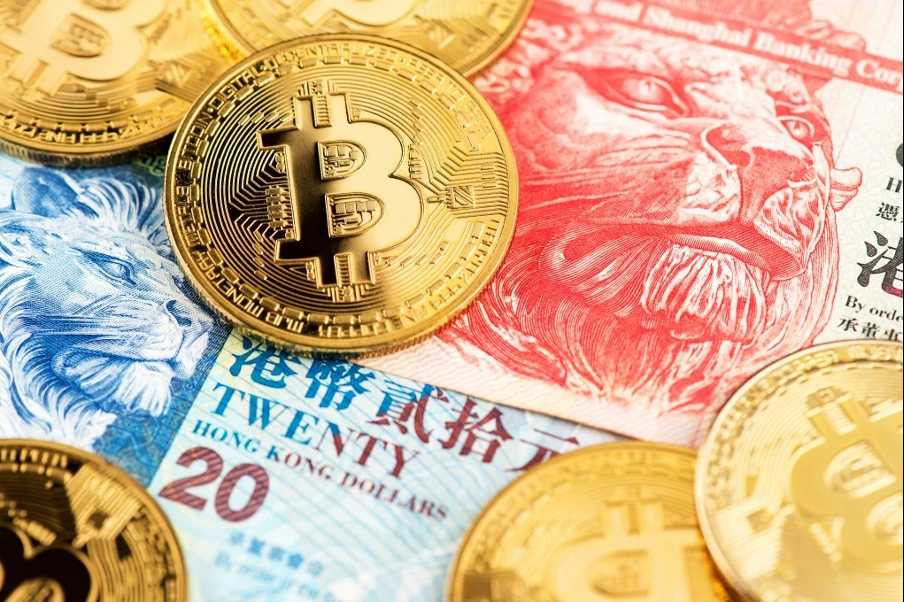
Hong Kong has launched its Digital Asset Policy Statement 2.0, marking a pivotal upgrade from its 2022 predecessor to solidify its position as a global leader in digital assets. The June 27 announcement emphasizes stablecoin regulation and asset tokenization as core priorities, aligning with the U.S. Senate’s recent passage of the Genius Act to regulate stablecoins, signaling intensified global competition in this burgeoning sector.
The LEAP framework outlines concrete measures, including a unified licensing regime for stablecoin issuers and a regulatory sandbox to test tokenized assets like green bonds and renewable energy projects. Under the Stablecoin Ordinance set to take effect August 1, issuers must maintain 100% reserve coverage with segregated assets held in trust, ensuring transparency and financial stability. For instance, entities like JD CoinChain and Standard Chartered are already testing compliant stablecoins for cross-border payments and supply chain finance. HashKey Group Chairman Xiao Feng noted Hong Kong’s shift from a "testing ground" to an institutionalized, scalable ecosystem, attracting global players.
The policy also aims to capitalize on the trillion-dollar potential of asset tokenization, with Hong Kong planning to regularize tokenized government bond issuances and expand into sectors like gold and solar energy. The city’s Cyberport has launched a HK$500,000 grant program for blockchain startups, fostering innovation in areas such as real estate and carbon credits. Analysts project the tokenized real-world assets (RWA) market could reach $18.9 trillion by 2033, with Hong Kong positioned to capture a significant share due to its robust infrastructure and policy support.
Meanwhile, the U.S. Genius Act imposes stringent reserve requirements for stablecoins exceeding $10 billion in market cap, mandating low-risk assets like U.S. Treasuries and subjecting issuers to dual oversight by the Federal Reserve and OCC. This contrasts with Hong Kong’s more flexible approach, which allows multi-currency pegs (e.g., HKD/USD) and facilitates cross-border collaboration. While both jurisdictions prioritize anti-money laundering (AML) standards, the U.S. seeks to reinforce dollar dominance, whereas Hong Kong leverages its role as a bridge between East and West to promote multi-currency stability.
Global stakeholders are closely watching these divergent strategies. Hong Kong’s "regulatory sandbox + innovation" model contrasts with the U.S.’s "compliance-first" stance, creating two distinct regulatory paradigms. However, both emphasize investor protection and financial integrity, with Hong Kong aligning with international standards like FATF guidelines. As stablecoins and tokenized assets reshape financial systems, experts warn of rising compliance costs and market fragmentation, urging regulators to foster interoperability. The race to define global standards has begun, with Hong Kong and the U.S. emerging as key contenders in this high-stakes competition.