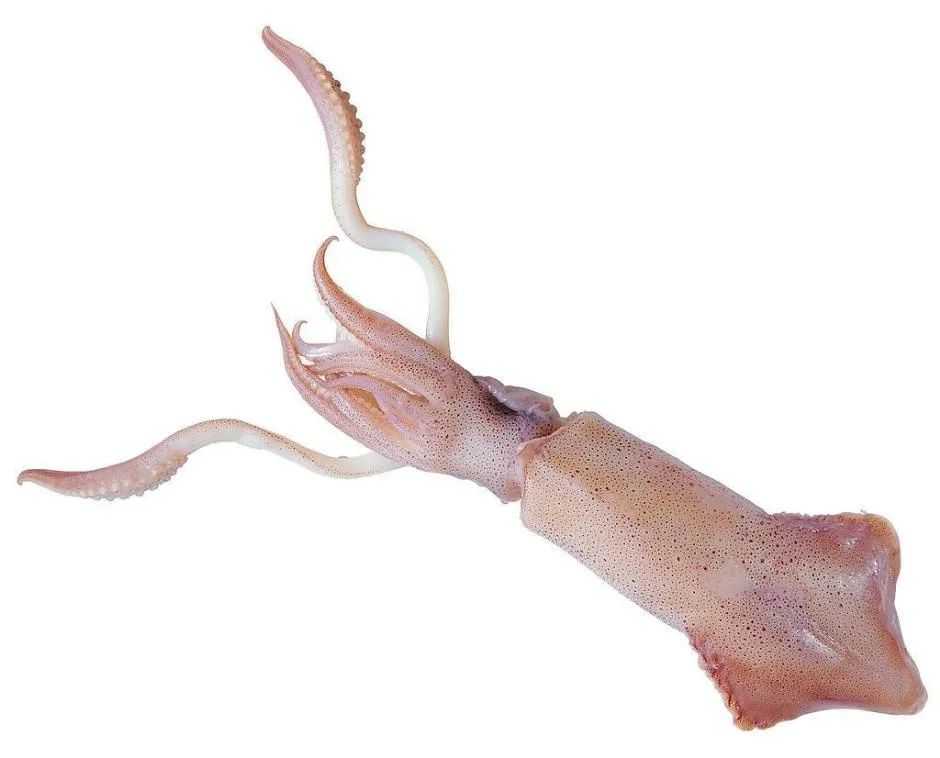
Squid, widely recognized as a popular seafood item, are fascinating marine mollusks belonging to the Teuthida order. These soft-bodied cephalopods are characterized by their elongated, torpedo-shaped bodies, ten flexible appendages (including eight arms and two specialized feeding tentacles), and a remarkable ability to navigate the world’s oceans with speed and precision. Found in both shallow coastal waters and the deepest abyssal zones, they play a crucial role in marine ecosystems as both predators and prey.
Squid exhibit a streamlined form that allows them to dart through water at high speeds, reaching up to 20 miles per hour in some species. Their bodies are covered in a smooth, muscular mantle that houses internal organs, including a feather-like pen (a remnant of their ancestral shell) that provides structural support. One of their most distinctive features is the ability to change skin color and texture using chromatophores, enabling them to camouflage with their surroundings or communicate with other squid. When threatened, they can expel a cloud of dark ink to confuse predators, a defense mechanism that has made this trait iconic. Most species have large, complex eyes that rival human vision in clarity, helping them spot prey or avoid predators in the dim ocean depths.
As highly adaptable predators, squid feed on a diverse diet of small fish, crustaceans, and even other cephalopods. Their two long tentacles, equipped with suckers or hooks, allow them to rapidly capture prey, which is then torn apart by a sharp, parrot-like beak. Squid are also a vital food source for larger marine animals, including whales, sharks, and seabirds, making them a keystone species in many food webs. Commercially, they are harvested in vast quantities for human consumption, appearing in dishes like calamari, sushi, and stir-fries. Their mild flavor, tender texture, and high protein content have made them a global culinary favorite.
Despite their abundance, some squid species face challenges from overfishing and habitat disruption. Industrial trawling and climate change—particularly ocean acidification and rising water temperatures—threaten their populations and the ecosystems they support. Conservation efforts, such as sustainable fishing practices and marine protected areas, aim to ensure their long-term survival. As both agile ocean predators and a cornerstone of global seafood markets, squid exemplify the intricate balance between marine biodiversity and human livelihoods, underscoring the need for responsible stewardship of our planet’s aquatic resources.