Rhynchopelates oxyrhynchus: The Sharpbeak Terapon of Asian Coastal Seas


Marine Biology
Rhynchopelates oxyrhynchus: The Sharpbeak Terapon of Asian Coastal Seas

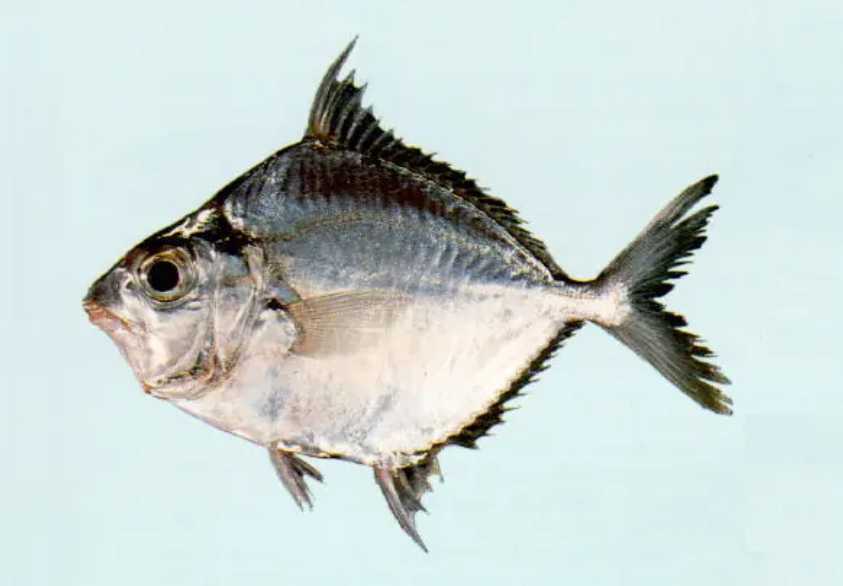
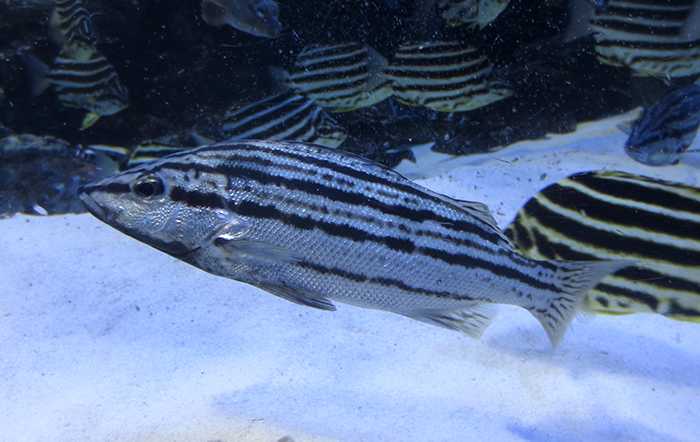
Rhynchopelates oxyrhynchus, commonly known as the sharpbeak terapon, is a captivating species within the Terapontidae family, inhabiting the coastal waters of Asia. This ray - finned fish is celebrated for its unique appearance and ecological role in the diverse ecosystems of the Western Pacific.


Growing up to 25 centimeters in length, the sharpbeak terapon features an oblong, relatively deep, and laterally compressed body, with juveniles showing more pronounced lateral compression. Its small, slightly oblique mouth does not extend as far back as the eye. The teeth are villiform, arranged in bands in each jaw, with the outer row being significantly larger than the inner rows, and there are no teeth on the roof of the mouth. The body is grey on the back and silvery below, adorned with four rather blotchy dark brown or black longitudinal stripes along its length, and some specimens even have irregular stripes between these main stripes. The base of the spiny part of the dorsal fin is dusky, as is its margin, while the soft - rayed part is banded. Juveniles have clear caudal fin lobes, but in adults, several narrow, irregular, parallel stripes appear on each lobe. The dorsal fin contains 12 spines and 9 - 11 soft rays, with the spiny part arched, and the third to sixth spines being the longest. The anal fin has 3 spines and 7 - 9 soft rays, and there are 60 - 75 pored scales in the lateral line.


Native to the Western Pacific, this species ranges from southern Japan and Taiwan to southern China and the Philippines. It inhabits inshore waters, frequently venturing into brackish waters, and juveniles are known to enter freshwater. As a carnivorous fish, it preys on invertebrates and smaller fishes. After spawning, the males take on the responsibility of guarding the eggs, fanning them to ensure proper oxygenation.


The sharpbeak terapon plays a crucial role in the coastal food web, both as a predator controlling populations of smaller organisms and as prey for larger marine species. It is fished using traps, handlines, and other inshore fishing gear. In Japan, it is also commercially aquacultured. However, like many coastal species, it faces threats from habitat degradation due to coastal development, pollution, and overfishing. Conservation efforts, such as protecting estuarine and coastal habitats and implementing sustainable fishing practices, are essential to ensure the long - term survival of this remarkable fish and the integrity of the ecosystems it inhabits.

Latest Stories
Travel News2 minute readIntroduction The Nord-Pas de Calais Mining Basin in northern France, once the beating heart of Europe's Industrial Revolution, now captivates the world with its unique story of industrial heritage revival. Spanning 120,000 hectares, this former coal mining hub was inscribed on the UNESCO World Heritage List in 2012 for its 109 preserved industrial sites and ecological restoration marvels.
Entertainment News1 minute readKatrina Kaif, a British-born actress who has made her mark in the industry, is celebrated for a beauty that defies easy description—one that leaves onlookers captivated.
Social News1 minute readThe longest country name ever recorded was that of a now-defunct state: the "Great Socialist People's Libyan Arab Jamahiriya." This lengthy title, used from 1977 to 2011, reflected the political ideology and structure under Muammar Gaddafi’s rule.
Social News1 minute readTajikistan, a 140,000-square-kilometer nation in Central Asia, grapples with stark poverty and systemic corruption. A surreal 2016 scandal saw billions in state funds vanish after being allocated to construction projects—exposing the grim reality of one of Asia’s poorest countries, with a GDP per capita of just $1,271.
Social News1 minute readPakistan, a South Asian nation with vast lands and nearly 240 million people, faces severe economic hardships, leaving millions of families in dire straits. The World Bank reports nearly a quarter of its population lives below the poverty line, with many households earning less than $100 monthly. Its GDP per capita stands at $1,461, while rising living costs make daily expenses unmanageable.
Car Information1 minute readOne of automotive history’s most iconic nameplates, the classic Mini, serves as the perfect canvas for retro modification projects. A recent collaboration between Callum (led by design legend Ian Callum) and Wood & Pickett brings together modern design sensibilities and upgraded chassis engineering, breathing new life into the British icon.
Travel News2 minute readNestled in the heart of the French countryside, the Château de Chantilly stands as a testament to centuries of artistic brilliance and aristocratic grandeur. This architectural marvel, often hailed as a "castle museum," seamlessly blends Renaissance opulence with a world-class collection of art and historical treasures, making it a must-visit destination for culture enthusiasts and history buffs alike.